

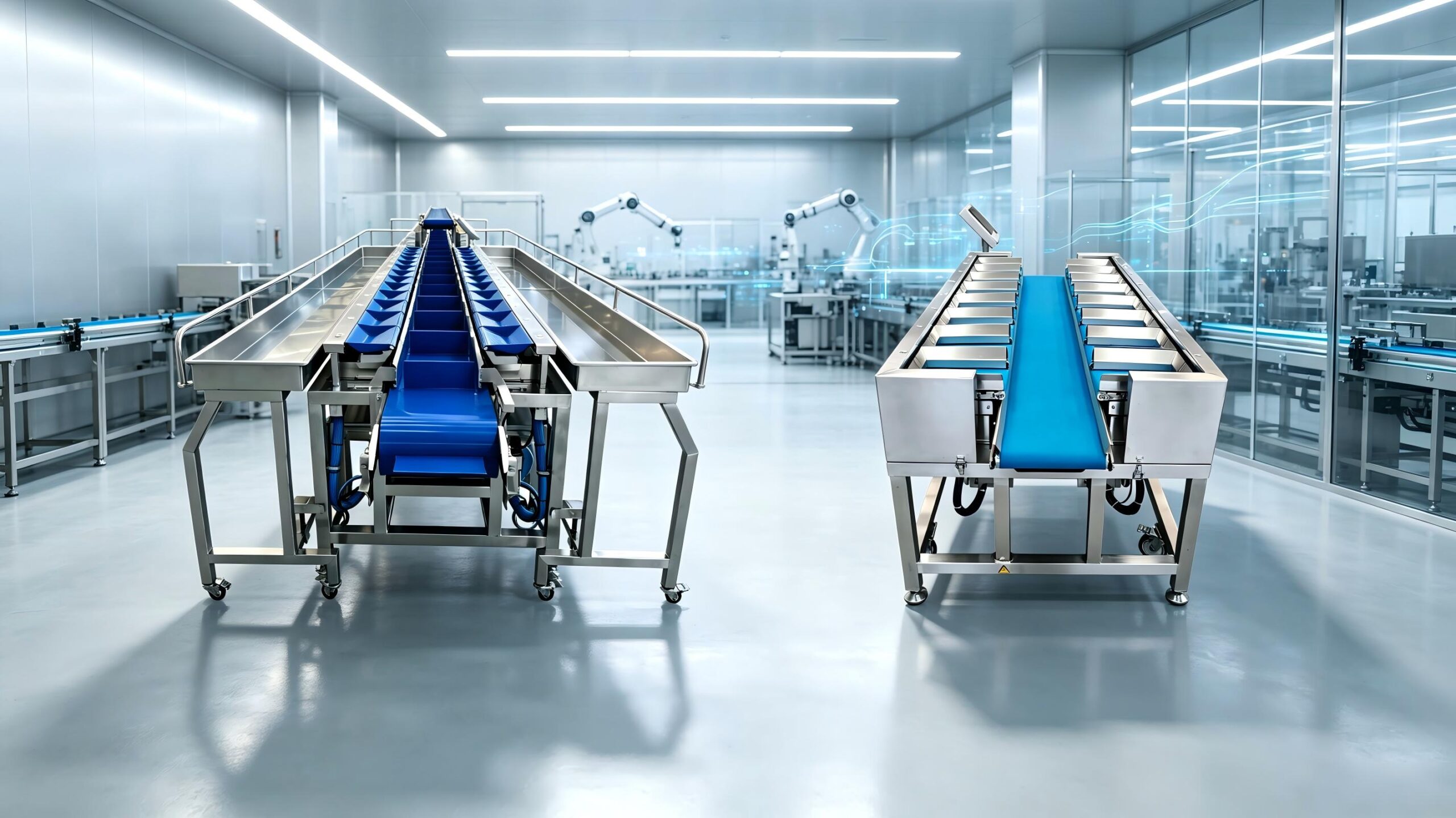
Selecting the ideal combination weigher is a critical decision for food processing plants aiming to maximize packaging speed, reduce product giveaway, and maintain precise portion control.
Among automated weighing solutions, belt combination weighers and bucket type combination weighers represent two distinct material handling methods. While both utilize multihead weighing principles to achieve high accuracy, they are engineered for different product characteristics. You can explore our full range of multihead combination weigher equipment to learn more about automated packing line integration.
What Is a Multihead Weighing System?
A multihead weighing system relies on a central microprocessor to disperse bulk material across multiple weighing units. The system instantly calculates hundreds of mathematical combination possibilities per cycle, selecting the exact combination of hoppers or belts that equals or comes closest to the target weight without under-filling.
Automated weighing machinery is widely deployed across diverse food sectors, including:
- Fresh, raw, and frozen seafood processing
- Poultry, pork, and beef portioning
- Fresh produce, fruits, and vegetables
- Confectionery, snacks, and dry bakery products
What Is a Belt Combination Weigher?
A belt combination weigher replaces traditional hoppers with gentle, individual belt conveyors. Products are placed or fed onto flat belts that move material directly over load cells without dropping or tumbling, making it the preferred solution for sticky, long, or extremely fragile items.
Key Advantages of Belt Combination Weighers:
- Zero Drop Impact: Prevents surface damage, bruising, or breakage on delicate food products.
- Smooth Material Transfer: Keeps long fish fillets, whole produce, or sticky meat strips neatly aligned during transfer.
- Easy-to-Clean Belt Design: Quick-release food-grade belts allow rapid sanitation during line changeovers.
What Is a Bucket Type Combination Weigher?
A bucket type combination weigher utilizes vertical hoppers (typically 10 to 26 heads) arranged in a radial configuration. Products fall into weigh hoppers by gravity, allowing ultra-fast calculations and rapid batch discharges.
Key Advantages of Bucket Type Combination Weighers:
- Exceptional Speeds: Capable of achieving up to 120–180+ discharges per minute on automated lines.
- Pinch-Point Accuracy: A larger pool of combination hoppers narrows weight giveaway down to fractions of a gram.
- Versatile Application: Ideal for free-flowing dry goods, frozen IQF foods, snacks, and hard confectionery.
Belt Combination Weigher vs Bucket Type Combination Weigher
| Operational Feature | Belt-Based System | Bucket-Type System |
|---|---|---|
| Product Handling | Gentle horizontal belt conveyance | Gravity chute feed and hopper drop |
| Material Suitability | Fresh, sticky, wet, or fragile foods | Free-flowing dry or frozen products |
| Weighing Surface | Conveyor belt load cell plates | Multihead stainless steel hoppers |
| Core Strength | Protects appearance of delicate items | Maximum throughput speed and ROI |
How to Choose the Right Equipment for Your Factory?
When deciding between a belt-based unit and a traditional hopper-based system, evaluate the following four operational criteria:
1. Physical Product Integrity
If your product is easily damaged, bruised, or prone to sticking to metal chutes (such as fresh salmon fillets or raw chicken strips), a belt system provides superior protection.
2. Line Speed Requirements
For high-capacity facilities targeting over 100 packs per minute, a multihead bucket system provides the continuous high-speed performance needed for VFFS or rotary packing machines.
3. Hygiene Standards and Washdown
Ensure your chosen machinery meets strict international food safety regulations, such as the FDA Food Safety Regulations. Look for IP65/IP67 waterproof stainless steel construction for daily pressure washing.
4. Factory Footprint and Automation Layout
Verify that the overall equipment height, feeding conveyor height, and working platform fit your production workshop dimensions cleanly.
Frequently Asked Questions (FAQ)
Can belt-based weighing systems handle wet seafood?
Yes. Belt systems designed for seafood feature waterproof load cells, IP67-rated enclosures, and textured non-stick belts tailored for wet environments.
How does hopper count impact multihead accuracy?
Increasing the number of hoppers increases the mathematical choices available during each discharge cycle, allowing the system to reach target weights with near-zero giveaway.