

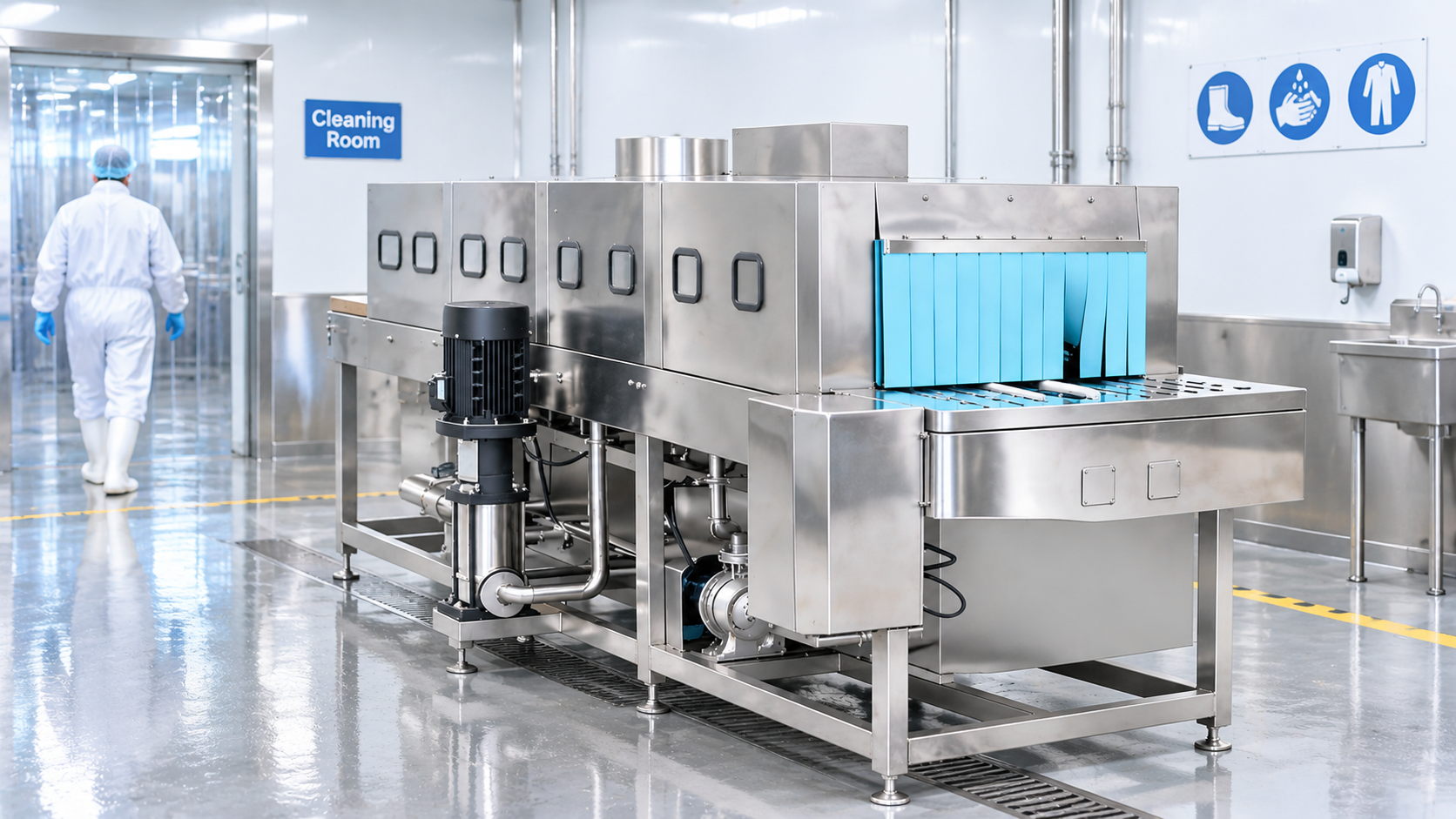
Reusable plastic crates, baskets, and trays play an important role in food processing operations. They are widely used for handling raw materials, transferring products between production stages, and storing finished goods. After repeated use, these containers can accumulate food residues, grease, dirt, and other contaminants.
Manual cleaning can require considerable labor and may result in inconsistent cleaning performance, particularly in factories handling large quantities of reusable containers every day.
An industrial crate washing machine provides an automated solution for cleaning reusable food processing crates. Depending on container specifications and production requirements, industrial washing systems can also be designed for compatible baskets, trays, and other reusable containers.
Longreat provides industrial cleaning equipment for food processing applications, helping manufacturers select suitable washing solutions according to their container types, production capacity, and cleaning requirements.
What Is an Industrial Crate Washing Machine?
An industrial crate washing machine, also known as a crate washer or automatic crate washing system, is designed to clean reusable crates and containers used in industrial production.
Unlike manual washing, an automatic crate washer uses a conveyor system and spray nozzles to clean containers as they pass through the washing chamber.
Depending on the machine configuration, the washing process may include pre-washing, main washing, rinsing, and optional drying. Water heating, detergent dosing, filtration, and water circulation can also be considered according to the required cleaning process.
Industrial crate washing machines are commonly used in meat processing, poultry processing, seafood processing, fruit and vegetable processing, and other food manufacturing facilities.
How Does an Automatic Crate Washing Machine Work?
An automatic crate washer typically operates through a continuous conveyor-based cleaning process. The exact washing sequence depends on the machine design and the level of contamination.
1. Automatic Feeding
Dirty crates are placed onto the infeed conveyor. The conveyor transports them into the washing tunnel at a controlled speed.
An automatic feeding arrangement helps reduce repeated manual handling and supports continuous operation.
2. Pre-Washing
The pre-washing stage removes loose food residues and larger particles from the crate surfaces.
This stage helps reduce the amount of contamination entering the main washing section.
3. Main Washing
During the main washing stage, spray nozzles direct pressurized water onto the crate surfaces.
Depending on the cleaning requirements, heated water and suitable cleaning agents can be used to remove grease, food residues, and other contamination.
The spray system should be designed to reach different areas of the containers, including corners and recessed surfaces.
4. Rinsing
After the main washing stage, containers pass through a rinsing section to remove remaining detergent and loosened residues.
Fresh water or a configured rinsing system can be used depending on the machine design and required cleaning process.
5. Optional Drying
For facilities that require drier containers before storage or reuse, an additional air-blowing or drying section can be considered.
The drying configuration should be selected according to the production process, available space, and required drying results.
Types of Containers Used with Industrial Washing Machines
Although crate washing machines are designed primarily for reusable crates, food processing facilities may also need to clean other types of containers.
Different container structures and dimensions require suitable washing configurations.
1. Plastic Crate Washing Machine
A plastic crate washing machine is used to clean reusable plastic crates commonly found in food processing and handling operations.
These crates are used for transporting meat, poultry, seafood, fruit, vegetables, and other food products.
An industrial crate washer can help remove food residues, dirt, and grease from reusable containers through an automated washing process.
2. Industrial Basket Washing Machine
Food processing baskets are used for collecting, transferring, and handling ingredients and products during production.
An industrial basket washing machine is designed to clean compatible baskets and containers. The washing system needs to account for basket openings, mesh structures, depth, and other design features to ensure effective spray coverage.
The actual machine configuration should be selected according to basket dimensions and cleaning requirements.
3. Industrial Tray Washing Machine
Food trays are commonly used in food production, processing, and packaging operations. They may accumulate grease, food residues, and other contamination during repeated use.
An industrial tray washing machine is designed for cleaning reusable production trays. Depending on tray dimensions and structure, the equipment may use a dedicated conveyor and spray arrangement.
Tray washing requirements can differ from crate washing, so the machine should be selected according to the actual tray type and production process.
4. Plastic Pallet Washing Machine
Reusable plastic pallets are used for transporting and storing materials in food factories and warehouses.
A plastic pallet washing machine is designed to clean larger and heavier containers than standard crates. Its conveyor structure, loading arrangement, and spray system may therefore differ significantly from those of a conventional crate washer.
Facilities requiring pallet cleaning should consider pallet dimensions, weight, contamination level, and required washing capacity before selecting equipment.
Key Features to Consider When Choosing an Industrial Crate Washer
When selecting an industrial crate washing machine for a food factory, several factors should be evaluated.
Stainless Steel Construction
Food processing environments require equipment that can withstand frequent cleaning and demanding operating conditions. Stainless steel construction is commonly used for industrial washing equipment because of its corrosion resistance, durability, and suitability for hygienic equipment design.
High-Pressure Spray Cleaning
A properly arranged spray nozzle system helps deliver water to different areas of the containers. Spray direction, water pressure, nozzle spacing, and conveyor speed all influence cleaning performance.
Water Heating System
For containers contaminated with grease or stubborn food residues, heated washing water may improve cleaning effectiveness. The required temperature depends on the type of contamination, cleaning agent, and washing process.
Water Filtration and Circulation
A filtration system can remove solid residues from circulating washing water. Water circulation can also help reduce fresh water demand, depending on the machine configuration and operating conditions.
Adjustable Conveyor Speed
Adjustable conveyor speed allows operators to control the time containers remain inside the washing chamber. This helps adapt the washing process to different contamination levels and production requirements.
Easy Cleaning and Maintenance
The machine should provide convenient access to its washing chamber, spray nozzles, filters, and water tanks. Regular cleaning and maintenance are important for keeping the washing system operating reliably.
Applications of Industrial Crate Washing Machines
Industrial crate washers are suitable for food processing facilities that regularly reuse containers.
Meat and Poultry Processing
Meat and poultry factories use plastic crates for handling raw materials, meat cuts, poultry products, and production transfers. Automatic crate washing equipment helps clean reusable containers after use.
Seafood Processing
Seafood factories use crates and baskets to handle fish, shrimp, shellfish, and other aquatic products. Industrial washing equipment helps remove seafood residues and supports the repeated use of processing containers.
Fruit and Vegetable Processing
Fruit and vegetable facilities use reusable crates and baskets for collecting, transporting, and sorting fresh produce. A suitable washing machine helps remove soil, plant residues, and other dirt accumulated during handling.
Frozen and Prepared Food Processing
Frozen food and prepared food manufacturers may use reusable crates and trays for transferring ingredients and finished products between processing stages. Automated washing equipment helps establish a regular container cleaning process.
How to Choose the Right Container Washing Machine
Choosing the right industrial washing equipment requires more than comparing machine prices or advertised capacity.
Consider the following factors before purchasing:
- Container dimensions: Provide the length, width, height, and structure of your crates, baskets, trays, or pallets.
- Required capacity: Estimate how many containers need to be cleaned per hour or per shift.
- Type of contamination: Identify whether containers are mainly contaminated with food residues, grease, soil, or other substances.
- Washing requirements: Confirm whether pre-washing, heated washing, rinsing, disinfection, or drying is required.
- Installation space: Consider the machine footprint, infeed and discharge directions, water supply, drainage, and electrical connections.
- Production integration: Determine whether the washing equipment needs to connect with existing container handling or production processes.
Providing these details helps manufacturers recommend a more suitable machine configuration.
Frequently Asked Questions
What is the difference between a crate washer and a basket washing machine?
A crate washer is primarily designed for reusable crates, while a basket washing machine is designed for compatible baskets and containers. Their washing principles may be similar, but conveyor structures and spray arrangements can differ according to container design.
Can one crate washing machine clean both crates and trays?
This depends on the container dimensions, structure, and machine configuration. Some compatible containers may be cleaned using the same washing system, while others require different conveyors or spray arrangements.
What is the difference between a crate washing machine and a pallet washing machine?
A crate washing machine is designed for smaller containers, while a pallet washing machine handles larger and heavier pallets. Pallet washing equipment generally requires a different loading arrangement and washing configuration.
Does an industrial crate washer include a drying function?
Not every crate washer includes drying as standard. An air-blowing or drying section may be available as an additional configuration depending on the equipment design.
What information is needed to get a quotation?
Manufacturers generally need container dimensions, photos, required washing capacity, contamination type, washing process, and available installation space to recommend suitable equipment.
Get an Industrial Container Washing Solution from Longreat
Every food processing facility has different container types, production volumes, and cleaning requirements. Selecting the right industrial washing equipment helps establish a more efficient and consistent container cleaning process.
Longreat provides industrial cleaning equipment for food processing plants. Contact our team and share your crate, basket, or tray dimensions, required capacity, and cleaning requirements. We will help you discuss a suitable washing machine configuration for your factory.
Longreat Automation – Your Trusted Partner for Complete Food Processing Automation & Hygienic Solutions.